Cured or Uncured Bacon… Which is right for me and my family?
Let’s dive into what cured and uncured bacon means on the commercial food labels and packaging. In reality all bacon has some type of curing to preserve the meat to keep it fresh and appetizing. The food packaging indicates what type of ingredients were used to preserve the meat.
- Cured (as labeled on packaging) – Uses chemical compounds like nitrates and nitrites to preserve the meat and give it a pink color.
- Uncured (as labeled on packaging) – Uses natural ingredients like celery powder and sea salt to preserve the meat. The USDA requires uncured bacon to be labeled as such.
Here are some other things to consider when shopping for cured or uncured bacon.
-
Taste – Cured and uncured bacon usually taste the same, unless the brine includes additional flavorings.
-
Salt content – Uncured bacon can be saltier than cured bacon because it sits in brine longer during curing. Low sodium bacon is more common these days, if you’re looking to reduce sodium intake, look for low sodium bacon.
-
Health – While nitrates occur naturally in the body and plants, too many can be harmful.
Because bacon has been cured, some of us might forget that bacon is still raw meat!! Handle it like you would any other raw meat, clean, chill, separate, and cook.
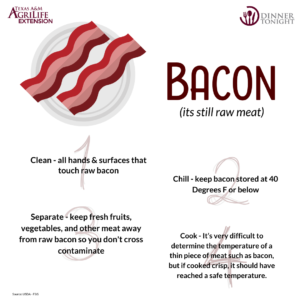
- Clean – all hands & surfaces that touch raw bacon.
- Separate – keep fresh fruits, vegetables, and other meat away from raw bacon so you don’t cross contaminate.
- Chill – Keep bacon stored at 40 Degrees F or below.
- Cook – It’s very difficult to determine the temperature of a thin piece of meat such as bacon, but if cooked crisp, it should have reached a safe temperature.
Find the full article from the USDA FSIS here.
Additional Sources: