• Skip to primary navigation
  • Skip to main content
  • Skip to primary sidebar
  • Skip to footer
Dinner Tonight

Dinner Tonight

Healthy Cooking for a Healthy Texas

  • Email
  • Facebook
  • Instagram
  • Pinterest
  • Twitter
  • YouTube
  • Home
  • Recipes
  • Store
  • Healthy Cooking Tips
    • How To
    • Food Safety
  • Family Mealtime
  • Meet the Team
  • Events

Homemade Broth

November 11, 2021 by Dinner Tonight

Are broth and stock the same thing? Although the terms are often used interchangeably, there is a difference between the two liquids. Both are used to make recipes such as soups, sauces, and gravies. The key difference between broth and stock is the use of meat or bones, the type of seasonings added, and the cooking time.

Making your own chicken broth is a great strategy to reduce food waste, stretch your food dollars, and control the amount of sodium.

How to Slow Cook Homemade Chicken Broth

Learning to make your own chicken broth is a great strategy to reduce food waste and stretch your food dollars! Due to its versatility as a base for soups, gravies, and sauces; broth is a pantry staple for many homes. Broth can also be used as a substitution for water in recipes such as rice, pasta, and risotto as a cost-efficient way to increase flavor in the dish. Additionally, making your own broth is an excellent way to control the amount of sodium that is often found in store-bought options.

Homemade broth is simple and only requires the following ingredients:

  • One whole chicken, skin and fat removed
  • 1- 2 Cups of Vegetable Scraps, Chopped
  • Choice of herbs and seasonings
  • Water

Directions:

  1. Select a slow cooker large enough to fit the chicken
  2. Place chicken in slow cooker
  3. Add vegetables
  4. Add 1 -2 Tablespoons of your choice of herbs and seasonings
  5. Add water until the slow cookers is two-thirds full
  6. Cook on low for 6 to 8 hours or on high for 4 to 6 hours. The chicken is done when the internal temperature of the chicken is 165° F as measured with a food thermometer.
  7. Separate the chicken from the broth by lifting the chicken and bones onto a large plate or bowl. Let chicken cool enough to touch in the refrigerator. Shred the meat with a fork and store in airtight containers. This chicken can be used in salads, sandwiches, or other recipes.
  8. Strain the broth by pouring into a colander over a large bowl. Dispose of the vegetables.
  9. Divide the broth into 1 cup containers, cover tightly, and refrigerate overnight.
  10. The next day, scoop off and dispose of fat that has settled on top of broth.
  11. Label the containers of broth with the date. Store in the refrigerator for up to 4 days or in the freezer for up to 4 months.

Looking for ways to reduce food waste at home? Save leftover scraps from vegetables to flavor your homemade broth or stock. Roughly chop leftover or lackluster vegetables into small chunks and store in the freezer in an airtight container. Continue to add scraps to the bag until it is full or you are ready to make your homemade stock or broth!

References:

https://cfaes.osu.edu/news/articles/chow-line-the-difference-between-broth-and-stock

https://spendsmart.extension.iastate.edu/recipe/chicken-broth/


Filed Under: Food Safety, How to videos, Tips & Tricks Tagged With: both, Chicken, How To, Slow Cooker, soup, stock

Casserole

November 10, 2021 by Dinner Tonight

Here is your one-stop casserole shop for all things casserole knowledge!

Busy weeknights call for simple mealtime recipes. Use this quick formula to help you with your casserole mashup!

  • 2 cups veggies,
    • get creative with it!
  • 1-2 cups starch
    • such as potatoes, bread, or pasta
  • 1 cup binder
    • such as milk, soup, or cheese
  • 1 cup protein
    • such as eggs, chicken, beef, and much more!
  • Seasonings
    • be sure to keep an eye on the sodium levels you’re adding!

Family mealtime can be busy, but you don’t want to forget about food safety. According to USDA guidelines, the internal temperature of casseroles should reach 165 degrees Fahrenheit before you can serve them for safe consumption.

Check out some of our casserole recipes on our website to get you started! Our Poblano Casserole recipe is one you may not have tried yet but is sure to be a new family favorite!

Filed Under: Food Safety, How to videos, Tips & Tricks Tagged With: casserole, Food Safety, How To

BYO Salads

May 19, 2021 by Dinner Tonight

BYO (Build Your Own)

A salad is a mix of various ingredients (cooked or raw) served cold. There are several ways to make a salad; thus, get creative with the following salad variety breakdowns:

Leafy Salad: raw greens (such as lettuce) often combined with other vegetables and toppings and served especially with dressing.

  • Elements of a leafy salad include lettuce, fruit and/or veggie, protein, crunch (nuts, bacon bits, croutons, etc.) with a dressing of your choice.

Fruit Salad: various mixed fruits with toppings and dressing.

  • Elements of a fruit salad include a mix of 3 or more various fruits with a dressing of your choice.
    • May squeeze lemon/lime juice when using bananas – this will help prevent browning.

Pasta Salad: small pieces (i.e., pasta, meat, fruit, or vegetables) usually mixed with a dressing.

  • Elements of a salad include pasta, fruit and/or veggie, diary with a dressing of your choice.

May pair a lean protein with any of your salads. Get inspired by our salad recipes and start building your (BYO) salad tonight!

A salad bar is an excellent way for everyone to join in and build their own (BYO) Salad. However, it’s essential to follow all food safety precautions before laying out your salad bar. Learn more below:

Clean and sanitize all surfaces, prep utensils, and containers before and after each service. Plus, wash all fresh produce.

Separate all ingredients into different containers, and each container should have its own serving utensil(s).

Cook eggs, meat (cook to correct temp), and pasta before chilling and serving in the salad bar.

Chill: Salad bar items must be kept at a temperature below 41 degrees Fahrenheit – may place ingredients over ice to help keep at the correct temperature.

Learn more about how to avoid cross-contamination.


References:

Gordon Food Service Contributors. (2018, August 21). Salad Bar Safety: The Cold Truth. Gordon Food Service. https://www.gfs.com/en-us/ideas/salad-bar-safety-cold-truth

Merriam – Webster. (1828). Salad – Definition. Merriam – Webster Dictionary. https://www.merriam-webster.com/dictionary/salad

Partnership for Food Safety Education. (2021). The Core Four Practices. Fightbac.Org. https://www.fightbac.org/food-safety-basics/the-core-four-practices/

Team, B. V. T. (2020, March 11). Salad Bar Food Safety: 10 Critical Ways to Protect Customers. Hitchcock Farms. https://www.hitchcockfarms.com/blog/salad-bar-food-safety


Dinner Tonight Links:

https://dinnertonight.tamu.edu/wash-fresh-produce/

Avoid Cross Contamination

https://dinnertonight.tamu.edu/recipes/salad-recipes/

Filed Under: Food Safety Tagged With: Food Safety, How To, Salad

Roasting Peppers

December 2, 2020 by Dinner Tonight

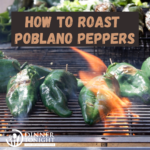
Let’s roast some poblanos today!

Poblano chiles are a mild green chile typically used to prepare chiles Rellenos or our Roasted Poblano and Creamy Corn Soup.  Roasting poblano not only adds flavor but also helps remove the tough outer skin which is difficult to digest.

Poblano peppers are not the only peppers that can be roasted.  Bell peppers and spicy peppers are also delicious when roasted.  Although roasting is not necessary, it provides loads of flavor.

Roasting several peppers at one time and storing them in the freezer is also useful for recipes prepared within a few months.


Roasting Peppers
Votes: 0
Rating: 0
You:
Rate this recipe!
Print Recipe
Add to Shopping List
This recipe is in your Shopping List
Roasting Peppers
Votes: 0
Rating: 0
You:
Rate this recipe!
Print Recipe
Add to Shopping List
This recipe is in your Shopping List
Ingredients
  • Peppers bell, poblano, etc.
Servings:
Units:
Instructions
  1. Preheat oven to 425 degrees F. Rinse and pat dry poblano peppers and place on a baking sheet. Turning occasionally, roast in oven for 20-25 minutes until all sides are charred and blistered. Peppers can also be roasted on an open flame or on a griddle.
  2. Remove peppers from oven and place inside a sealed plastic bag to sweat for 10-15 minutes. (This process makes peeling the skin easier.)
  3. Once cooled, peel skin with a knife and remove stems and seeds. Dice peppers and set aside.
  4. Store tightly sealed in a plastic bag or airtight container. Use peppers within 2-3 days if stored in the refrigerator, or 4-6 months in the freezer.
Recipe Notes

Nutrition facts will vary by pepper. Fresh vegetables are naturally low in fats, saturated fats, sodium, and added sugars.

Filed Under: How to videos Tagged With: How To, poblano peppers

Root Vegetables

August 10, 2020 by Dinner Tonight

Root vegetables are some of the most nutrient-dense vegetables in the world. They grow under the earth’s surface and absorb nutrients from the soil. They are packed with a high amount of antioxidants, vitamins, and iron.  Root vegetables are also filled with fiber, which helps you feel fuller longer and aid in digestion.

There is a long list of root vegetables, some of the more popular are sweet potatoes, yams, beets, carrots, parsnips, fennel, turnips, rutabagas, yuca, onions, garlic, celery root, jicama, horseradish, turmeric, radishes, and ginger are all considered roots.

While each root contains its own set of health benefits, they share many of the same characteristics. Let’s take a look at some of the more popular root vegetables.

Carrots-One of the most well know veggies and root vegetables packed with nutrients.  Carrots glow with the antioxidant beta-carotene, Vitamin A & K.  A popular crunchy snack when consumed raw, but sweet and delicious roasted or sautéed. Look for beautiful vibrate colors of carrots in orange, purple, yellow, red, and white.

Turnips-A filling root vegetables, turnips are full of fiber, Vitamin C, and potassium.  This veggie can be swapped for any potato recipe.  Try substituting in place of fries, mashed turnips, or make a tasty turnip coleslaw.  Turnips have a bright purple color on the lower tip.

Beets-An earthy taste to them and high in nutrients, beets are a very popular root.  Beets have a high concentration of nitrate which helps support exercise performance and provide more blood flow to your brain. Beets can even support to lower your blood pressure.  This root, high in folate and manganese, can be added to many different types of recipes.  Try adding beets to your smoothies, on your salads, or roasted with other root vegetables.

Onions/Garlic– A staple in many kitchens, onions are used in many dishes to provide flavor, fiber, and Vitamin C. There are different types of onions, however, all have the same flavor and smell.  Whether diced, roasted, slice or sautéed, onions provide much flavor to any food combinations. Garlic is another root veggie that is used to provide more flavor to dishes.  Nutritionally garlic is high in Vitamin C and B6, but most importantly an immune system booster to help fight off infections.

Ginger-a smaller root that is related to turmeric, ginger is antioxidant-rich.  Noted for providing herbal remedies, ginger can be used to flavor soups, stews, tea, and smoothies.

Sweet Potatoes/Potatoes-Sweet potatoes are high in both Vitamin A and C along with fiber.  They are sweeter and less starchy than regular potatoes, however can be cooked the same at regular potatoes.  Try boiling, baking, and roasting sweet potatoes at a side dish, or make it a main dish.  Potatoes are a starchier root veggie, but high in fiber and vitamin C.

All produce needs to be washed before preparing, but root vegetables need just a little more attention.  Follow these easy steps to make sure all the dirt is out of your roots!

Cleaning your root vegetables like beets, potatoes, and carrots is a must before preparing.  Even if you’re planning on peeling your vegetables, a good cleaning is essential to wash off any dirt and bacteria.  After all, these vegetables are pulled out of the ground by their stems.

Start by cleaning countertops, cutting boards, and utensils with hot soapy water before peeling or cutting produce. Bacteria from the outside of raw produce can be transferred to the inside when it is being cut or peeled.

Wash root vegetables under running water, rub briskly with a firm brush to remove dirt.   You can choose not to peel your vegetables after washing well, or peel and then rise again before placing on your countertop to prepare.


Sources:

13 Healthiest Root Vegetables. Healthline.com

A Guide to Root Vegetables. Ohmyveggies.com

What Are Root Vegetables? SouthernLiving.com

Filed Under: Tips & Tricks Tagged With: Food Safety, How To, tips and tricks

  • Page 1
  • Page 2
  • Page 3
  • Interim pages omitted …
  • Page 11
  • Go to Next Page »

Newest Recipes

  • Chicken Taco Wraps with Spicy Sauce
  • Southwest Beef Skillet
  • Balsamic Chicken and Spinach Salad
  • Blackberry Mocktail
  • Chicken, Mushroom and Caramelized Onion Flatbread

Recipes to Try

  • Main Dishes
    • Beef Recipes
    • Chicken Recipes
    • Turkey Recipes
    • Pork Recipes
    • Seafood Recipes
    • Vegetarian Recipes
    • Salad Recipes
  • Side Dish Recipes
  • Snack Recipes
  • Dessert Recipes
  • Kid Friendly Recipes
  • All Recipes

Sign up for our newsletter to get new recipes & tips!

Sign Up Now

AgriLife Extension logo

  • Compact with Texans
  • Privacy and Security
  • Accessibility Policy
  • State Link Policy
  • Statewide Search
  • Veterans Benefits
  • Military Families
  • Risk, Fraud & Misconduct Hotline
  • Texas Homeland Security
  • Texas Veterans Portal
  • Equal Opportunity
  • Open Records/Public Information
Texas A&M University System Member